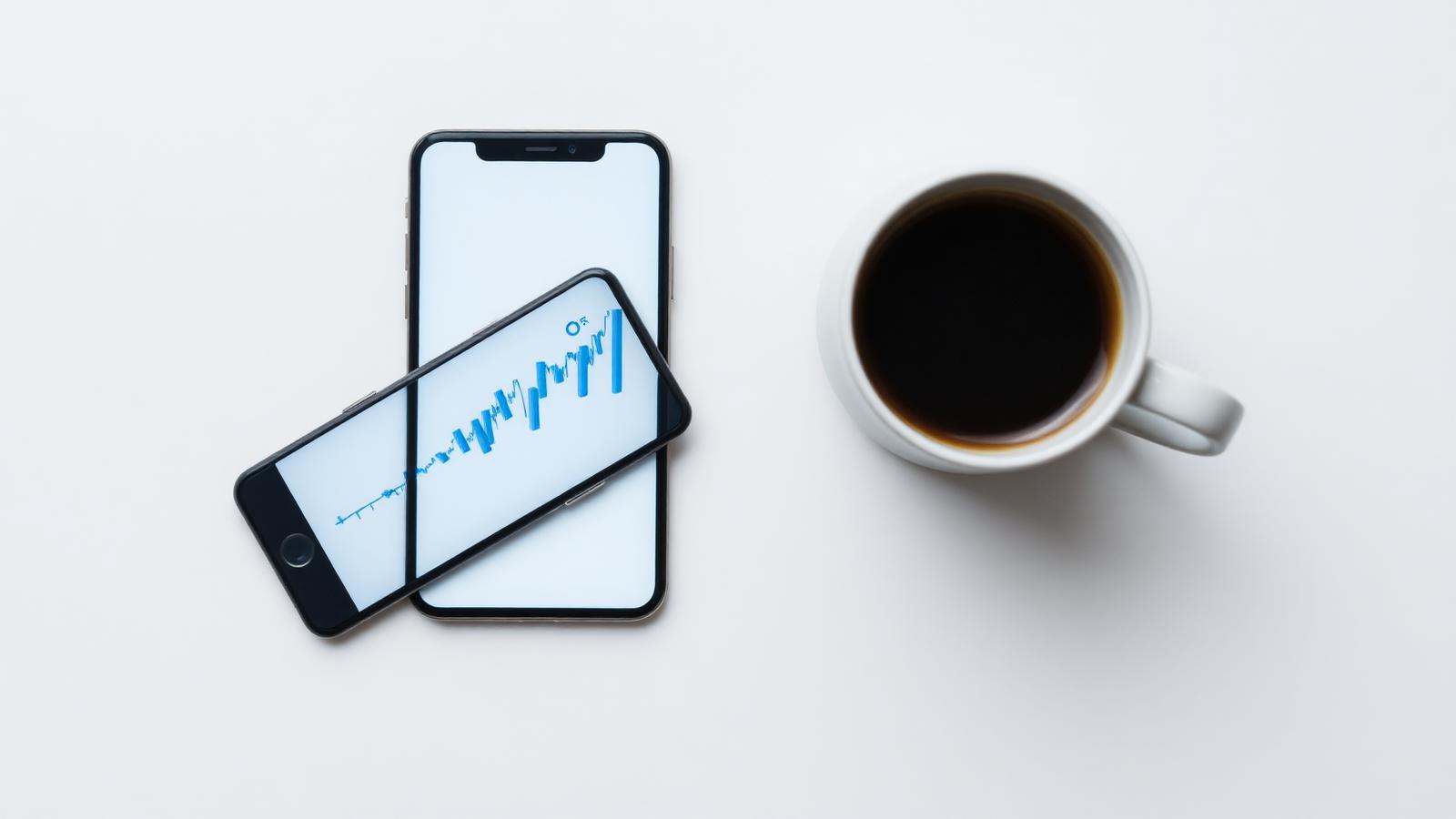
Why Your Phone Is the Best Trading Tool You Already Own
By Mark Morris · August 17, 2026 · 6 min read
The barrier to trading was never hardware. It was time, attention, and confidence — and a phone happens to be very good at protecting all three.
Picture the stock photo version of a trader: a dark room, six monitors, red and green everywhere. It is an intimidating image, and it is mostly theatre.
Almost nobody learning to trade needs that. What you need is a way to check a market a couple of times a day, place a small order, and get on with your life.
Your phone already does that. And in some quiet ways it does it better than a big desk setup.
Fewer screens means fewer bad decisions
Six monitors show you six ways to change your mind. A single small screen shows you one thing at a time.
Beginners lose money far more often from over-trading than from missing an opportunity. Every extra chart is another invitation to act when doing nothing was the better trade.
A phone naturally limits how much you can stare at, which turns out to be a kind of built-in risk control.
Alerts beat monitoring
Watching a chart all day feels productive. It is not. It is a slow way to get emotionally attached to a number.
The better pattern is to decide your conditions in advance and let the app tell you when they happen. You get a notification, you check your plan, you act or you do not.
This is where AI-assisted apps earn their keep. They watch a hundred things so that you can watch none of them.
Your phone already knows how to protect you
Face ID or a fingerprint, encrypted storage, app-store review, remote wipe if you lose it. Most phones are more secure than the laptop people trade on.
Turn on two-factor authentication for any brokerage or trading app. Use a unique password. Those two steps put you ahead of most people.
The three-habit mobile setup
First: set a fixed check-in time. Once in the morning, once in the evening. Trading is not improved by being available to it at every red light.
Second: write your plan in your notes app before you open the trading app. Entry, exit, and the amount you are willing to lose. Three lines is enough.
Third: turn off push notifications for price moves and keep only alerts you deliberately created. Unrequested alerts are somebody else's agenda.
What a phone is genuinely bad at
Deep research. Reading a full annual report on a 6-inch screen is miserable, and skimming it is worse than not reading it.
Complex multi-leg strategies. If a trade needs a spreadsheet to explain, it does not belong on a phone — and probably does not belong in a beginner's account either.
Fast manual reactions in volatile markets. If your strategy depends on split-second clicking, mobile is the wrong tool. Automated rules are the fix, not faster thumbs.
Start where you are
Trading involves real risk, and the size of your screen does not change that. What the right setup changes is how often you act on impulse.
A simple mobile routine — a plan, an alert, a small position — is a more honest beginning than an expensive desk you will feel obliged to justify.
Use what you already own. Add complexity only when a real limitation, not boredom, demands it.
Common questions
Get the weekly AI trading brief
One honest email with what changed, what it means, and what to ignore. No hype, unsubscribe any time.